
No-till is one of the key principles of regenerative agriculture in an arable context. However, minimising ploughing is rarely enough to build soil health, resilience and carbon on its own.
In our latest recording for Grounded ‘Live’, soil microbiologist Kyle Richardville and beef, sheep and arable farmer Stuart Johnson, from our mentoring team, were joined by an expert panel to discuss regenerative techniques and practices in arable.
The conversation covered everything including equipment, cover cropping, yield versus profit and advice for beginning to make changes on your own farm.
You can watch the full webinar below or listen to it as a podcast here.
No-till as part of a wider system
“I'm a big fan of direct seeding, no-till and zero-till,” says Michael Thiele, who is a consultant for our mentoring partners Understanding Ag, who provide support and advice in regenerative farming around the world.
“But it's not a system, it's just part of a system. Zero till is necessary, but it's insufficient if you really want to drive soil health forward.”
He says minimising tillage is much more effective when it is applied alongside the other principles of soil health, including encouraging diversity, keeping living roots in the ground and introducing livestock into the rotation.
How much disturbance is too much?
Dr David Purdy, who has spent years researching soil health, including at the LamportAgx site, says it is important to find the sweet spot of disturbances that promote productivity and function and those that can damage structure and vital fungal networks.
“We talk about the disturbance hypothesis. At one end you've got heavy, big, disturbances and at the other end you have worms moving through the soil, or seeds being planted and growing,” he says.
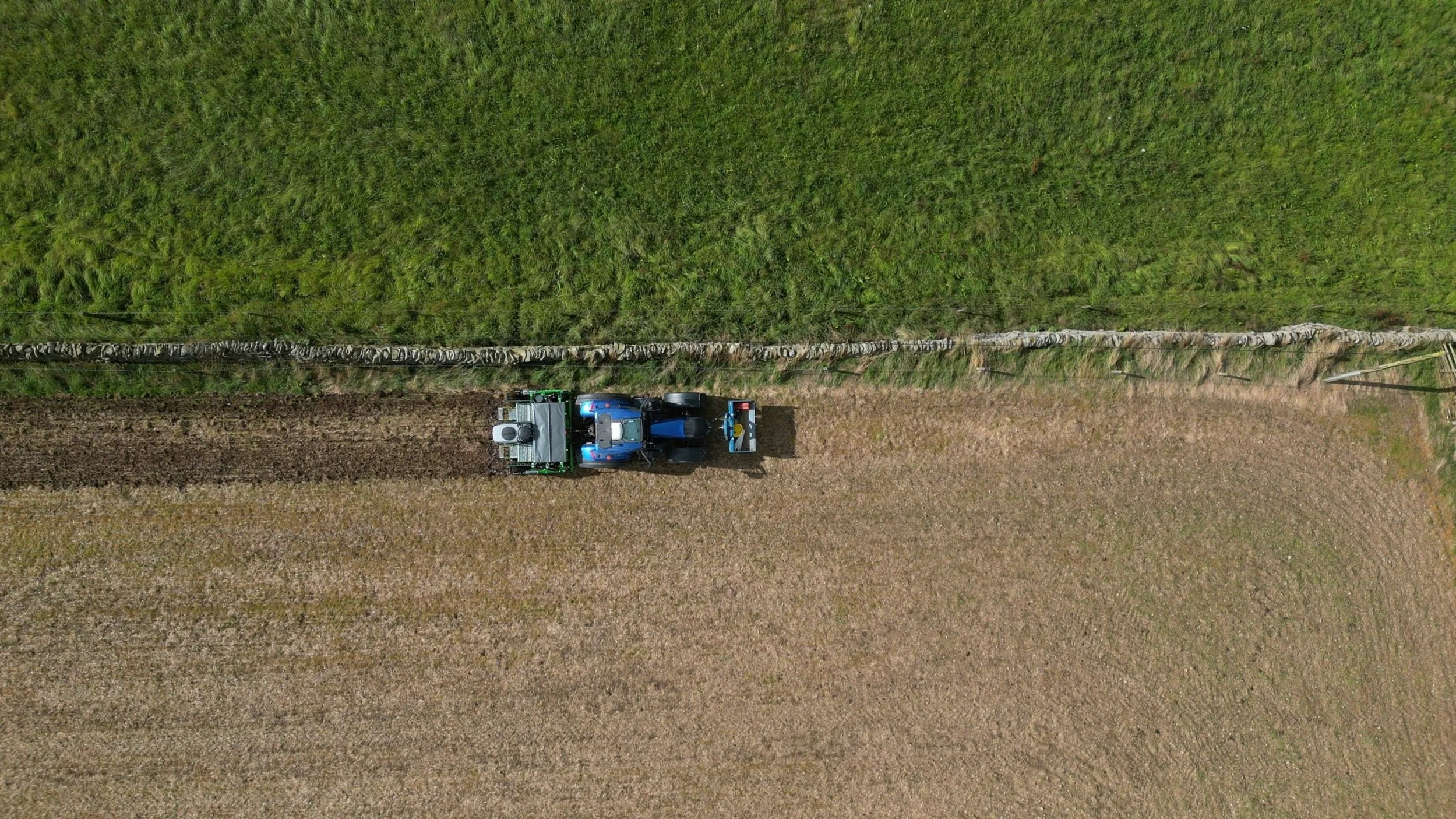
Direct drilling on a farm in Northumberland.
“It’s about trying to give the system enough, but not too much, disturbance to manage the crop in a profitable way, which is ultimately what we have to do.”
“We have to step back and ask why we want to reduce tillage?” says Michael.
“If you drag a piece of steel through the soil we could be doing that to accomplish any number of goals, but when you do there are consequences.
“There’s a loss of soil carbon, you’re losing soil aggregation, you break up the fungal hyphae and destroy those networks. There are all these good reasons why we should try and reduce tillage.
“I am not saying we should eliminate it but, as best we can, try and reduce it.”
Terminating cover crops to maximise soil function
David says although cover crops are massively important, if they are not terminated early enough they can begin to rob the soil of nutrition which should be going towards cash crops.
“There are times when you will get away with drilling on the green. The problem is you will not know until after that whether you're going to get away with it or not,” he says.
“Zero till is necessary, but it’s insufficient if you really want to drive soil health forward.”
“It depends on if you get a dry spring. If you get a dry April, or May into June, and you've terminated the cover crops late, there will be a high chance that the cover crops will be scavenging a lot more nutrition out of the soil, particularly nitrogen and particularly sulphur.”
He says research has shown terminating as early as January has little negative effect, as soil remains covered as plants die off with continuing earthworm and biological activity.
“Actually, if anything, it's having a positive effect on biology. After years of research. that is one of the most fundamental principles that we now hold to.”
Profit margin versus yield at Cranley Barn Farms
Regenerate Outcomes member Tom Edmondson farms just outside Milton Keynes with his wife Mary.
When he took on the farm 10 years ago the arable ground had been managed conventionally for many years and had developed a number of problems, including black grass.
However, he has been able to improve the health of the soil through the use of practices including cover-cropping, minimising disturbances and introducing livestock into the rotation.
Tom says his approach balances chasing yields with safeguarding profit and his quality of life.

Tom Edmondson has reduced agrochemical inputs by 60% on his farm.
“Every year I go and see my accountant and he tells me ‘turnover’s vanity, profit is sanity’,” says Tom.
“I think you could put that into a yield versus profit context as well.
“Having made the changes and changing my mindset, we've got to a point now where we are matching our yearly average yield.
“We've not reduced that, but our margin has increased significantly because we've been able to reduce our agrochemical inputs by about 60%.
“That's without taking into account time sat in the tractor seat away from your family or being able to spend time on other parts of your business.
“We are a much more successful business than we were when we first set out to do it, and I sleep much better at night. I might be able to get a greater yield, but the questions is at what cost? And is it worth that cost?”
Advice for adopting regenerative practices on arable farms
David says there are steps farmers can take to begin adopting regenerative practices in an arable system before making the investment in equipment.
“One is really understanding your system, understanding your soils, doing basic soil testing, really getting to grips with what you're dealing with,” he says.
“That will tell you to a large extent what you can do and what might be more challenging.
“We are a much more successful business and I sleep much better at night. I might be able to get a greater yield, but the questions is at what cost? And is it worth that cost?”
“Secondly, just trial things. We don't need to change the whole farm. You can do a tramline trial, or when you're doing cover crops, just leave a strip where you don't do cover crops and when the spring crop comes, you'll see what happens.
“You can learn a heck of a lot without spending a heck of a lot.”
Tom says asking other farmers for advice is also important.
“If you are looking at doing it, you won't be the only person in your area who is,” he says.
“Get curious, ask people questions and don't be afraid.
“The biggest impact I've had with what we do is reintroducing ruminant livestock into the rotation. You might be an arable farmer and not be interested in livestock, but there'll be some farmers in your area who are looking for something to graze over the winter.
“Get friendly with them too, because that will really help superpower your soil.”
Regenerate Outcomes works with
farmers to grow profits
We provide one-to-one mentoring to help you cut costs and improve crop and livestock performance.
At the same time, we baseline and measure soil carbon at no upfront cost to generate carbon credits which you can retain or sell for additional income.
Find out more by downloading our Programme Handbook.