
Insights
Does my farm qualify?
How diversifying into soil carbon can play a part in profitable enterprise stacking on your farm
Farmers are increasingly looking to diversify their operation to get the maximum return possible from each hectare of land.
Many are exploring the concept of enterprise stacking, which can involve using the same land to produce food, deliver environmental payments, attract private finance and improve resilience.
Earlier this month, Regenerate Outcomes Account Director Jake McNaughton joined a panel for the Farmers Weekly Transition webinar on Profitable Stacking.

Answering your questions on soil carbon credits
Farmers are in the unique position of being able to remove carbon from the atmosphere by building soil organic matter.
This represents an opportunity to generate revenue by selling carbon credits.
In this article, our Chief Scientific Officer, Matt Jordon, answers some of the common questions farmers have about the carbon market.
How regenerative practices can help cut fertiliser and diesel costs
“The old saying goes that ‘turnover is vanity, profit is sanity’ and this is just as true in farming as any other business. With so many farmers living on such tight margins, a sudden spike in overheads can soon begin to whittle away profits, with all the headaches and stress that brings.
“For those who are heavily dependent on bought-in inputs, such as fertiliser and diesel, global events that are out of your control can suddenly mean the difference between being in the red or the black.
“The good news is that it is possible to reduce this dependence by adopting regenerative principles to improve soil health.”

Meet your mentor: Dairy farmer Andrew Rees
“I like the fact that the mentoring Regenerate Outcomes are offering is based on farmers helping farmers, whereas the UK agriculture advice industry is very much led by suppliers.
“Those who sell you feed will tell you how much you need feed and those who sell fertiliser will tell you you need fertiliser. “It’s good to bring some independence back to that and empower farmers to make decisions for themselves.
“A lot of farmers just run on prescriptions but it’s good to bring back the profession of agriculture and enable them to make decisions for themselves.”

Grounded ‘Live’: Is no-till enough?
No-till is one of the key principles of regenerative agriculture in an arable context. However, minimising ploughing is rarely enough to build soil health, resilience and carbon on its own.
In our latest recording for Grounded ‘Live’, soil microbiologist Kyle Richardville and beef, sheep and arable farmer Stuart Johnson, from our mentoring team, were joined by an expert panel to discuss regenerative techniques and practices in arable.
The conversation covered everything including equipment, cover cropping, yield versus profit and advice for beginning to make changes on your own farm.

Meet our members: Huw Jones, Bryn Farm, West Wales
“I first heard about Regenerate Outcomes through one of the grazing groups I am a member of and it appealed to me to get some mentoring alongside the opportunity to baseline and measure our soil carbon.
“When you get started with this type of farming there is no handbook to tell you how to do everything, but sometimes you’ve just got to try things and make mistakes and learn.
“It can make a big difference to have someone to talk to and ask questions as you go through that process.”

Grounded ‘Live’: Why you need a soil carbon baseline now
In the first episode of our Grounded ‘Live’ sessions, we brought together an expert panel to discuss soil carbon baselines and everything you need to know about generating income from your soil.
Regular Grounded hosts Kyle Richardville and farmer Stuart Johnson, from our mentoring team, were joined by Regenerate Outcomes Chief Scientific Officer Matt Jordon and Director Tom Dillon.
In addition, they were also joined by Luke Baldwin, CEO of Nature Broking, and Wiltshire farmer George Hosier, who is also a member of our mentoring team.

Gaining maximum value from soil carbon for farmers
Regenerate Outcomes is committed to maximising value for farmers by building soil health.
As well as improving crop and livestock performance, reducing inputs, cutting costs and growing profits, this value also comes from providing high integrity soil carbon baselining and measurement.
The more robust the baselining and measurement process, the higher the value of the carbon credits you can generate.
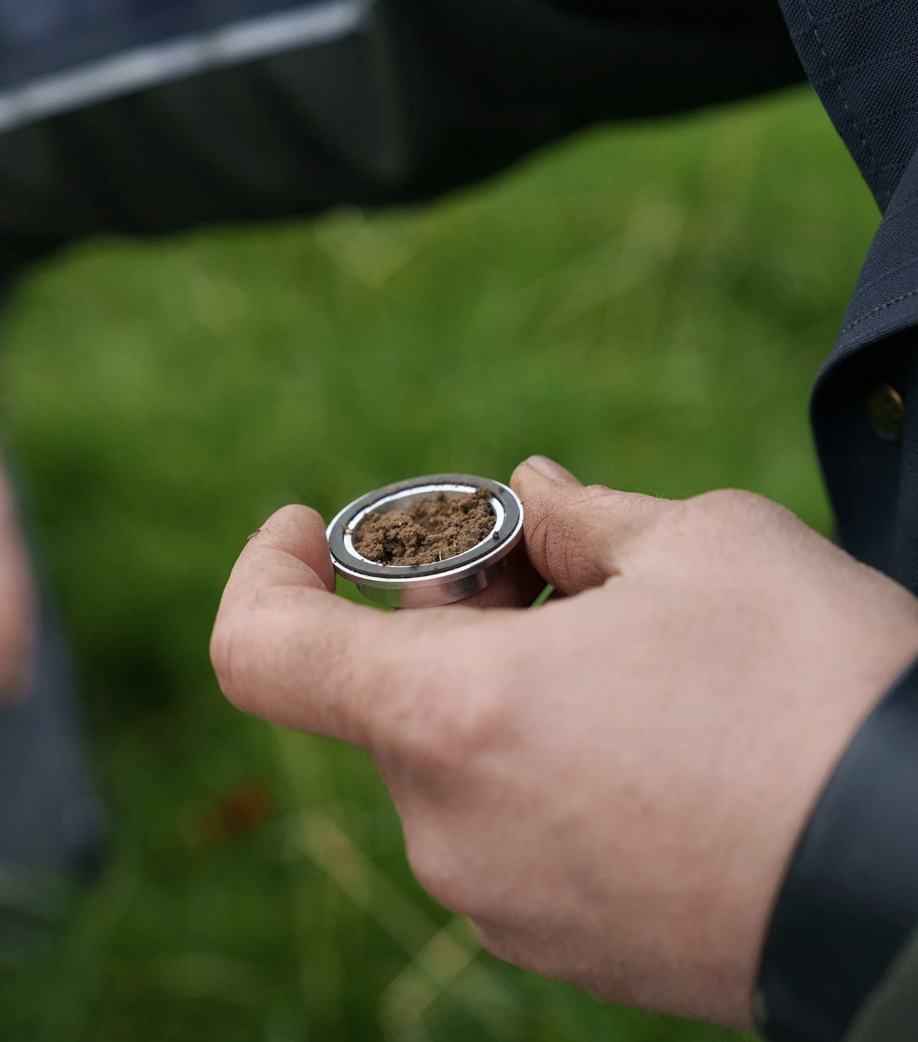
This is why we work with Agricarbon, who combine thorough physical soil sampling with state-of-the-art laboratory analysis to meet the internationally recognised Verified Carbon Standard.

Building soil carbon: An opportunity to grow profits and generate income
In this article, Northumberland beef and sheep farmer and Regenerate Outcomes’ Chief Scientific Officer, Dr Matt Jordon, explains how farmers can earn additional revenue from healthy soil.
Improving soil health drives crop and livestock performance, reduces the need for external inputs, cuts costs and grows profits.
This is not to mention a host of other benefits such as greater water infiltration and retention, improved nutrient cycling and resilience to weather extremes.
In addition, it also creates the opportunity for farmers to generate income by selling soil carbon credits.

Carbon for farmers: Carbon credits in the supply chain and insetting
Although farming releases greenhouse gases, it can also remove carbon dioxide from the atmosphere and help mitigate climate change.
There is a lot of talk about carbon in farming, but it can be difficult to follow the many terms and jargon being used and how they are relevant to your business.
In the latest in this series of articles, Regenerate Outcomes’ Chief Scientific Officer and sheep and beef farmer Dr Matt Jordon discusses how carbon credits can be used in the farming supply chain and the concept of insetting.

Carbon for farmers: An introduction to the carbon market
The carbon market is well established with viable opportunities for UK farmers today.
In fact, the carbon market is a lot older than many people realise and the first carbon markets emerged in the late 1990s.
However, the conversation is quite new to farming and soil carbon credits from UK farmland have only really taken off in the last 5-10 years.

Carbon for farmers: Why you need to get a soil carbon baseline now
There is much nervousness in the farming community about carbon markets.
However, farmers should not let this put them off getting a measured soil carbon stock baseline in place.
Many farmers think that by doing nothing, you’re keeping your options open for the future.
While this is to some extent true, it also means you’re not recording the carbon you might be sequestering now.

Understanding carbon: The essentials of carbon credits for UK farmers
In the last of our series explaining how carbon credits can create additional income as part of a resilient and profitable farm business, Bill Goldie - sales adviser at environmental risk management consultant Redshaw Advisers - talks about the fundamentals of the carbon market.
As Bill explains, there are two major markets for carbon credits: The compliance market and the voluntary market.
“Regenerative agriculture, if done properly, can remove huge volumes of carbon from the atmosphere and as such generate huge volumes of removal credits,” says Bill.

‘A process farmers can trust’: Meet Annie from Agricarbon
Regenerate Outcomes works with Agricarbon to generate internationally recognised carbon credits which can be sold to create additional revenue.
We caught up with co-founder Annie Leeson to find out more about Agricarbon’s approach and how it ensures the carbon credits we produce are of the highest value to both carbon buyers and our farmer members.
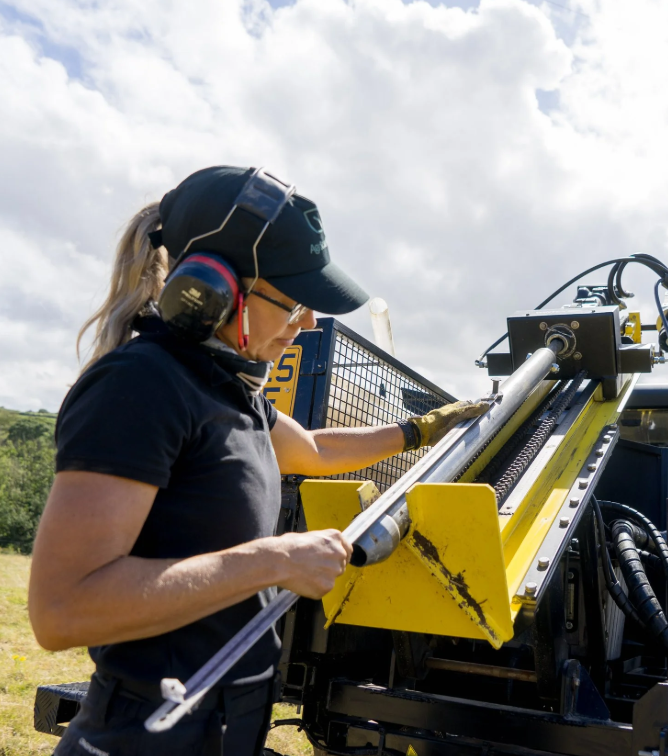
Agricarbon achieve this through the use of an industrial scale, robotic processing facility, which guarantees a high degree of accuracy in their soil sample analysis and a high sample throughput.

Understanding soil carbon: How plants and animals increase carbon in healthy soils
Last month Regenerate Outcomes brought together a group of experts to answer your questions on the role of carbon in regenerative farming and how it can be used to generate income through the sale of high quality carbon credits.
Over the coming weeks we will be following up with a series outlining some of the key information presented by the panel.
First up is Blain Hjertass, from our mentoring partner Understanding Ag, who has been practising regenerative farming in Saskatchewan, Canada, for 20 years.