
Meet our Members: Verity Megginson farms arable and sheep in East Yorkshire
Verity Megginson farms 330 acres of arable at Kirkburn Manor Farm, in the East Riding of Yorkshire, with the help of her daughter and two teenage sons.
She rents another 40 acres for grazing 100 Exlana ewes, which also graze cover and forage crops as part of the arable rotation.
Verity originally used conventional methods when she took on the farm six years ago, but soon realised she wanted to farm in a different way. She joined Regenerate Outcomes in 2024.
She initially found out about the programme after emailing Gabe Brown, who leads our mentoring team. Gabe put her in touch with farm mentor Kyle Richardville who was more than happy to provide support and advice.
“I thought, ‘Wow, this lot are amazing’,” remembers Verity.
“If they are willing to share so much of their knowledge and time just on the strength of an email, then they are a good set of people to be involved with.
Mentoring and soil carbon measurement from Regenerate Outcomes
“Day to day, it is fantastic to be able to ask Regenerate Outcomes for advice. It has been completely invaluable joining the programme. I don’t know how else I would have done it.
“Regenerate Outcomes is really important for the mentoring they provide but it also introduces you to a network of people, someone you can have a laugh with, talk about the mistakes you’ve made and share ideas.
“That’s the whole thing with farming, it’s a permanent experiment. That’s why I like it. You are working with an unknown because you are working with a living thing. We’ll never know everything about it and I find that fascinating.
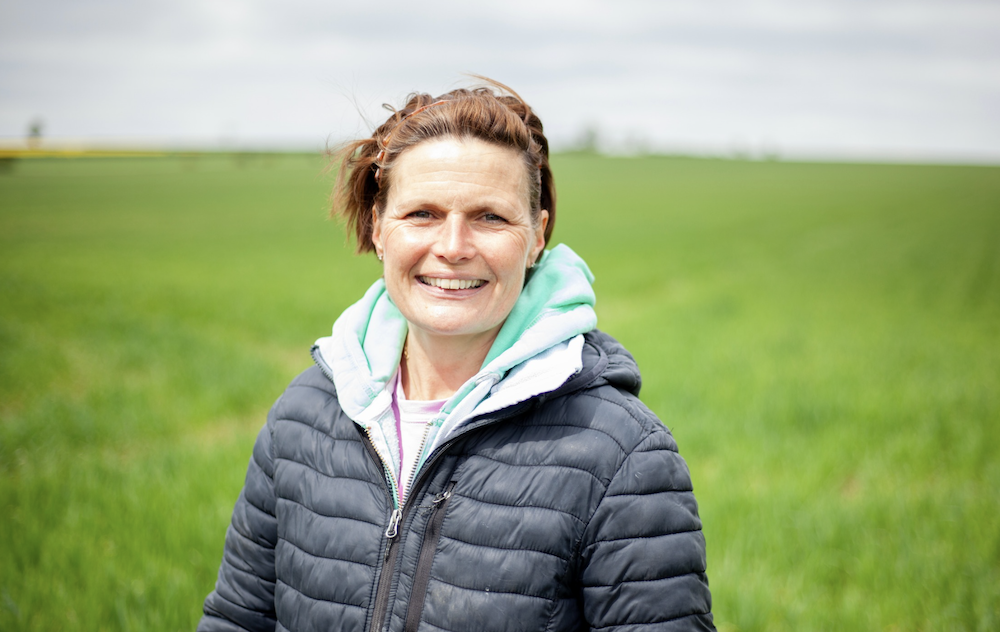
“You are working with an unknown because you are working with a living thing. We’ll never know everything about it and I find that fascinating.”
“People do take the Mickey when you try to do things differently and you need to have quite a thick skin. Kyle has been fantastic, because sometimes I just need to have a chat with someone for a bit of a pep talk, because there are a lot of people ready to tell you that what you’re doing will never work.
“For every idea you have, there'll also be reasons why it might not be possible and having someone to help me through that process is incredible. They will give you some guidance, but they also let you come to your own conclusions.”
As a member of Regenerate Outcomes, Verity was also enthusiastic about the opportunity to receive a soil carbon baseline on her farm at no upfront cost and the chance to generate additional revenue from carbon credits.
“Regenerate Outcomes is really important for the mentoring they provide but it also introduces you to a network of people, someone you can have a laugh with, talk about the mistakes you’ve made and share ideas.”
“I thought, if I am going to get a carbon baseline done then now is the time to do it,” she says.
“There is no point doing it in five years’ time when I have already built some soil carbon. I also knew I didn’t have to part with any money now and I could opt out if I wanted to.
“Day to day I'm just trying to get the soil biology going in my system and to reduce my inputs and grow my profit margin. Building carbon in the soil is the best way to do that and do what’s right by the planet. If I can get a financial gain from it at the end of five or 10 years, then that’s fantastic.”
‘Something needed to change’
Verity, who works as a physiotherapist alongside her time on the farm, says there are a lot of similarities between soil and the human body.
“Soil is a system and it needs certain things to be in balance to be well,” she says.
“In my physio clinic I am doing the same thing and trying to work out what is missing from somebody’s body in order to heal them.”
When Verity initially took on the farm, it was growing rape, potatoes, wheat and barley, with regular applications of fertiliser and other chemicals.
“When the contractor came and was spraying out there, I just wanted to shut the windows. I didn’t want to eat the food if it was being produced like that. Something needed to change. I started going around digging holes with the children and counting worms and getting to know more about the soil.
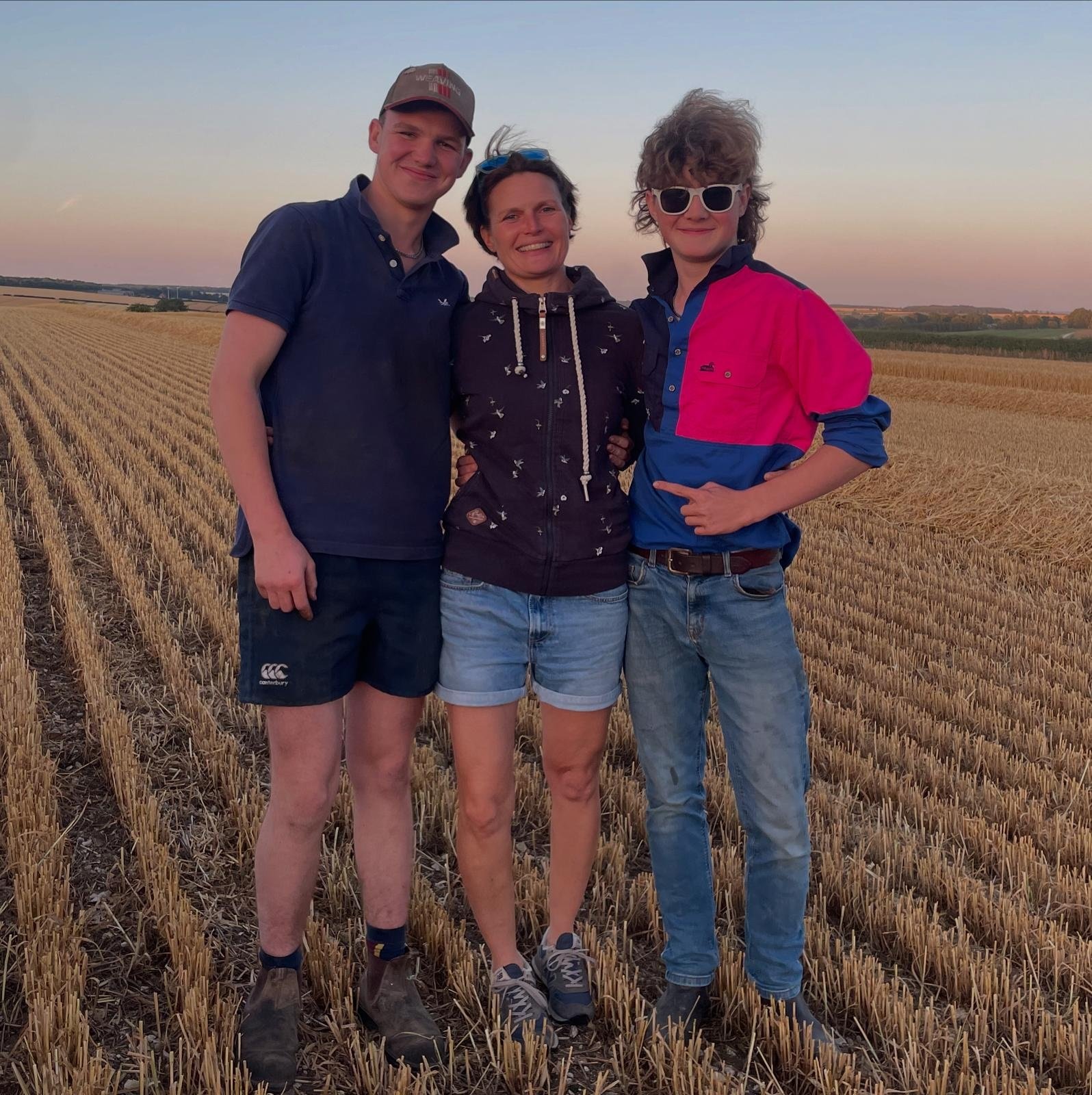
Verity farms alongside her daughter and two teenage sons.
“Then I came across Gabe’s book Dirt to Soil and that opened a whole new world to me.”
Alongside the mentoring from Regenerate Outcomes, Verity has been working with her contractors to improve soil health and reduce the reliance on inputs on the farm.
Initial attempts at direct drilling and cover-cropping had limited success due to compaction layers built up over years of conventional management.
Ultimately, Verity made the decision to subsoil the entire farm in order to break up the compaction. This has allowed roots to infiltrate deeper into the soil profile and enabled the effective use of disc drilling.
“Subsoiling seemed like the complete opposite of what I wanted to do, because it was disturbing the soil,” says Verity.
“But I think sometimes when you start using regenerative methods it is important to be honest about what a poor state your soil is in. Sometimes you need to do some work initially to earn the right to implement practices like direct and disc drilling.”
“When the contractor came and was spraying out there, I just wanted to shut the windows. I didn’t want to eat the food if it was being produced like that. Something needed to change.”
The farm now produces linseed, rape and wheat. Small amounts of foliar fertiliser are applied along with some glyphosate to terminate cover crops. However, Verity is hoping to continue reducing these inputs.
On the advice of Kyle, she has introduced Exlana sheep, which graze crops as part of the rotation. She is also introducing a mob-grazing system on the grazing platform she rents nearby.
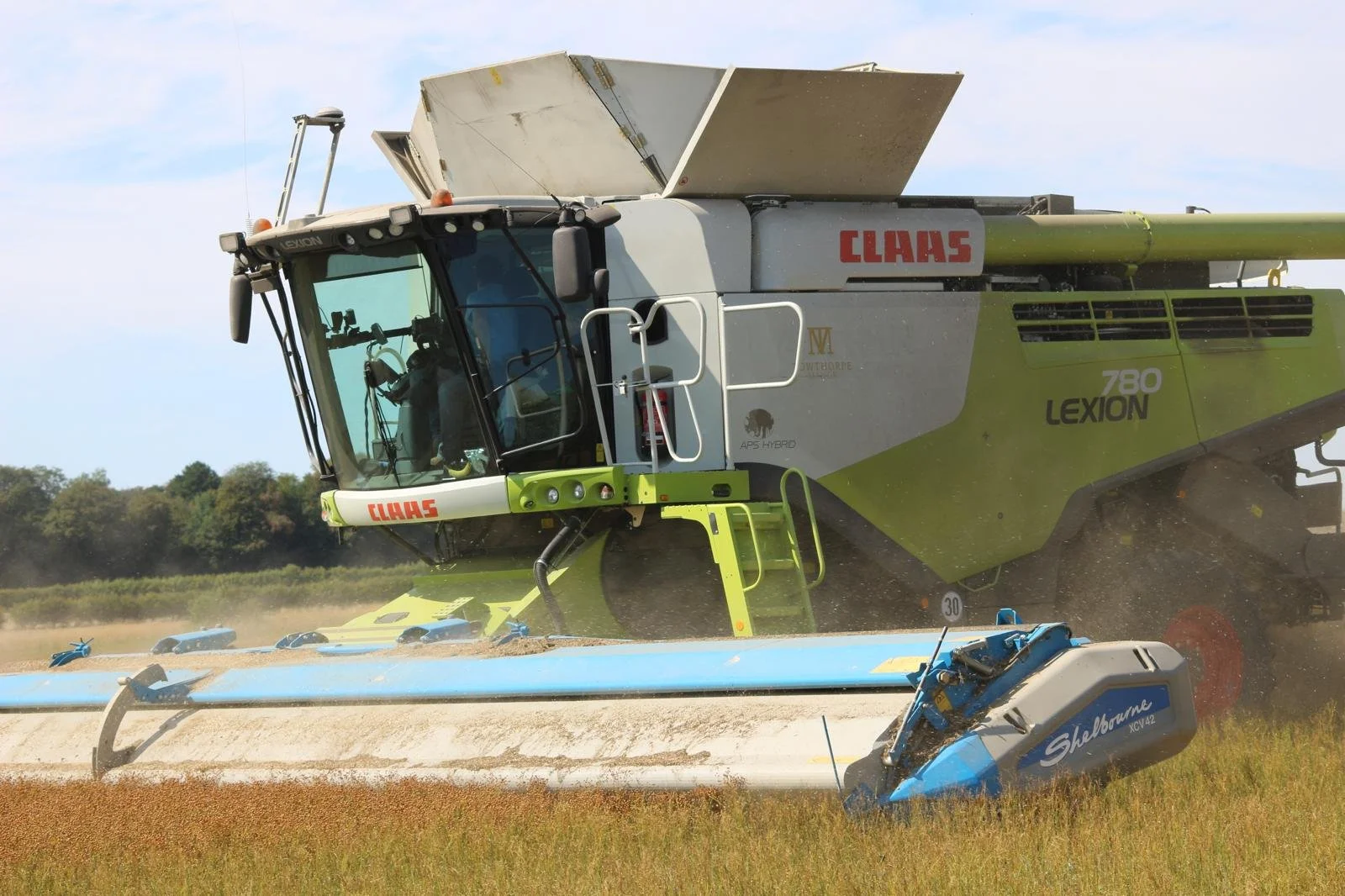
Harvesting at Kirkburn Manor Farm.
Exlana are self-shedding, which reduces management, and also have a good temperament for regular rotation and enclosure at different locations.
“I move them once a week during the winter on the grazing cover crops,” says Verity.
“There have been no major problems and I don’t lie awake worrying that they might have escaped. You need to keep the energiser on strong and I also train the lambs early so they know not to go near the fence.
Healthy soil, fewer inputs, nutritious food
“I never started off thinking I would be a farmer, but I always loved being outside and I like caring for people. I don’t think you can be a regen farmer without caring and having empathy. You have to have a feeling for what effect your actions are going to have.
“Being a physio and having worked in the NHS, I can see how important it is to increase the nutrient density of the food people are eating. Chronic inflammatory disease, obesity, even mental health conditions; so much of it comes down to the food we are eating and we hold the key to changing that.”
Verity is in the process of setting up her own self-service vending shop for her lamb and other produce and is hopeful that soil function and biology will continue to grow.
“I’m at that exciting point of thinking ahead, because I've got rid of my compaction layers, and the cover crops and the roots will be able to do even more of a job in the future and that means we’ll become more resilient to extreme weather. Over time I should also be able to start withdrawing my synthetic inputs and putting less nitrogen on.
“I have just bought a mobile container to start producing regenerative laying hens and to move them around as part of the rotation. I may even potentially take some fields out of the arable rotation and put in livestock instead.
“This is a much better way of farming for me. It makes me feel happier doing it. I couldn’t have carried on doing it the same way as I was before.”
Regenerate Outcomes works with
farmers to grow profits
We provide one-to-one mentoring to help you cut costs and improve crop and livestock performance.
At the same time, we baseline and measure soil carbon at no upfront cost to generate carbon credits which you can retain or sell for additional income.
Find out more by downloading our Programme Handbook.