
Grounded ‘Live’: The regenerative transition
In the latest episode of Grounded ‘Live’, our panel discussed experiences, successes and lessons learned from making the transition to using regenerative practices.
Hosts Kyle Richardville and Stuart Johnson, from our mentoring team, were joined by Regenerate Outcomes members Graham Rutherford and Llian and Sian Jones, as well as Amy Hughes of Empower Ag.
Together they shared their stories of making changes to reduce inputs and improve soil health.
You can watch the full live session here:
“If we don't do something, we're not going to be here much longer.”
Graham farms 875 acres with beef and sheep and chickens in central Northumberland.
During the seventies and eighties, the farm was put into arable with significant damage to the soil through ploughing and poor harvests.
Graham and brother Michael began returning livestock to the rotation but still with limited results, before going organic in 2005.
“It wasn't because I wanted to be an organic farm,” says Graham.
“We just saw the money was there. We thought, we can get hold of that conversion payment, use that money to put grass back in, put the fences in and just push for a more livestock-based system.
“It was just the real feeling that this farm is struggling. If we don't do something, we're not going to be here much longer.
“Another big change for us came in 2018, when we had a very, very dry year. That year we decided we had an opportunity to sell all the lambs as store in one go.”
This ultimately led to the decision to only sell store lambs, rather than fattening their own.
“If we're going to do that, we can stop growing fodder crops,” says Graham.
“If we didn't need the fodder crops, maybe we don't want to do the arable either.
“We were quite interested in the five soil health principles and trying to come away from doing an awful lot of ploughing.
“So that was a decision we made. Let's just simplify everything.”
They shut down the pig operation and stopped growing arable and brought cattle into the system alongside the sheep.
They now have 100 predominantly Aberdeen Angus suckler cows and 1500 ewes, alongside 12,000 laying hens.
The sheep graze outside for the winter and Graham is trying to move to a system for outwintering all of the cattle as well.
Using a low-input system in the hills of North Wales
Sian and Llian are third generation farmers at Moelogan Fawr near Conwy in North Wales, which is an exposed hill farm with a maximum height of 500m.
Sian is the third generation of her family on the farm, which she and Llian took on in 2018, farming Stabiliser cattle and native Welsh Talybont ewes. For the last four or five years they have been focusing on using grazing management and extended rest periods to reduce inputs.
“When we came back to the farm, we had complete freedom over the operational side, which meant we became very cost-conscious early on,” Says Sian.
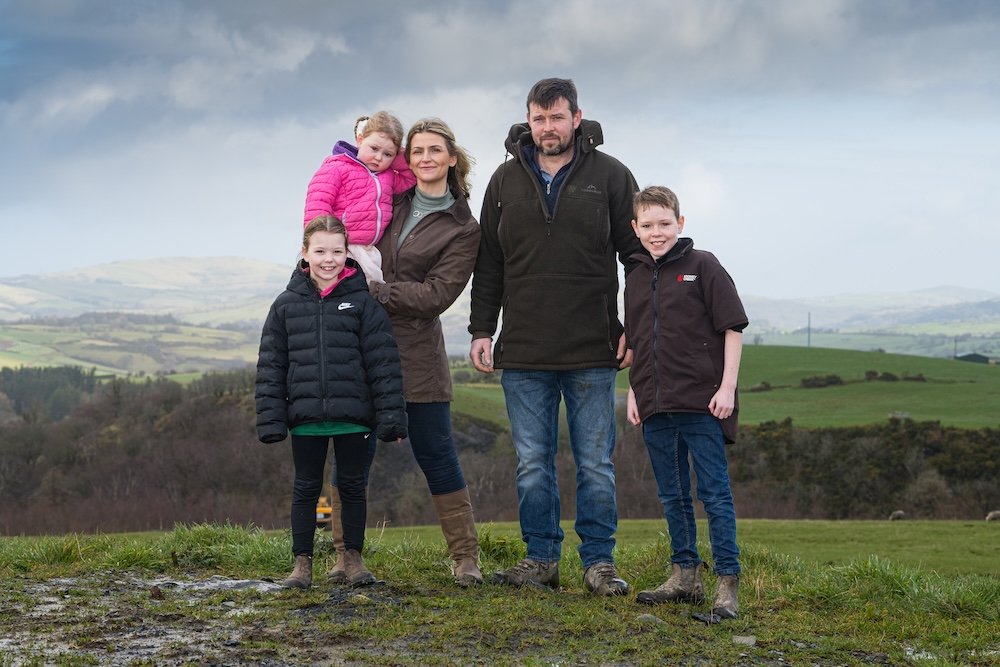
Llion and Sian Jones and family
“We've been involved in benchmarking and discussion groups, which helped us understand the true costs and where efficiencies could be made.
“Over the last few years, we've been planting woodland and hedgerows just to build a bit more resilience against the weather and to improve the environment for the livestock and hopefully keep stock out for longer and reduce our outwintering costs.
“We've been focused on breeding cattle that generally perform off the grass and producing breeding stock for the low input grass-based system. We just want them to do well wherever they go onto other farms.
“In the future, I think the priority for us is to keep putting the selection pressure on the cattle, getting them to perform and in turn, hopefully, that will improve our soils.”
The importance of communication
Amy grew up on her family’s farm in Yorkshire and now runs her own company Empower Ag, which works with farmers to support them to make positive changes to improve their farms and lives.
“The crux of that is very much about human behaviour change and all the skills you need, good conversations, good relationships, managing conflict and all those things we see across the industry with family farms in particular,” she says.
Amy says that resistance to change can even occur in the face of clear evidence of poor financial performance.
“You can show people that they are in the red and have been in the red for a while, and it's only going to get worse and it still doesn't create change in some people,” she says.
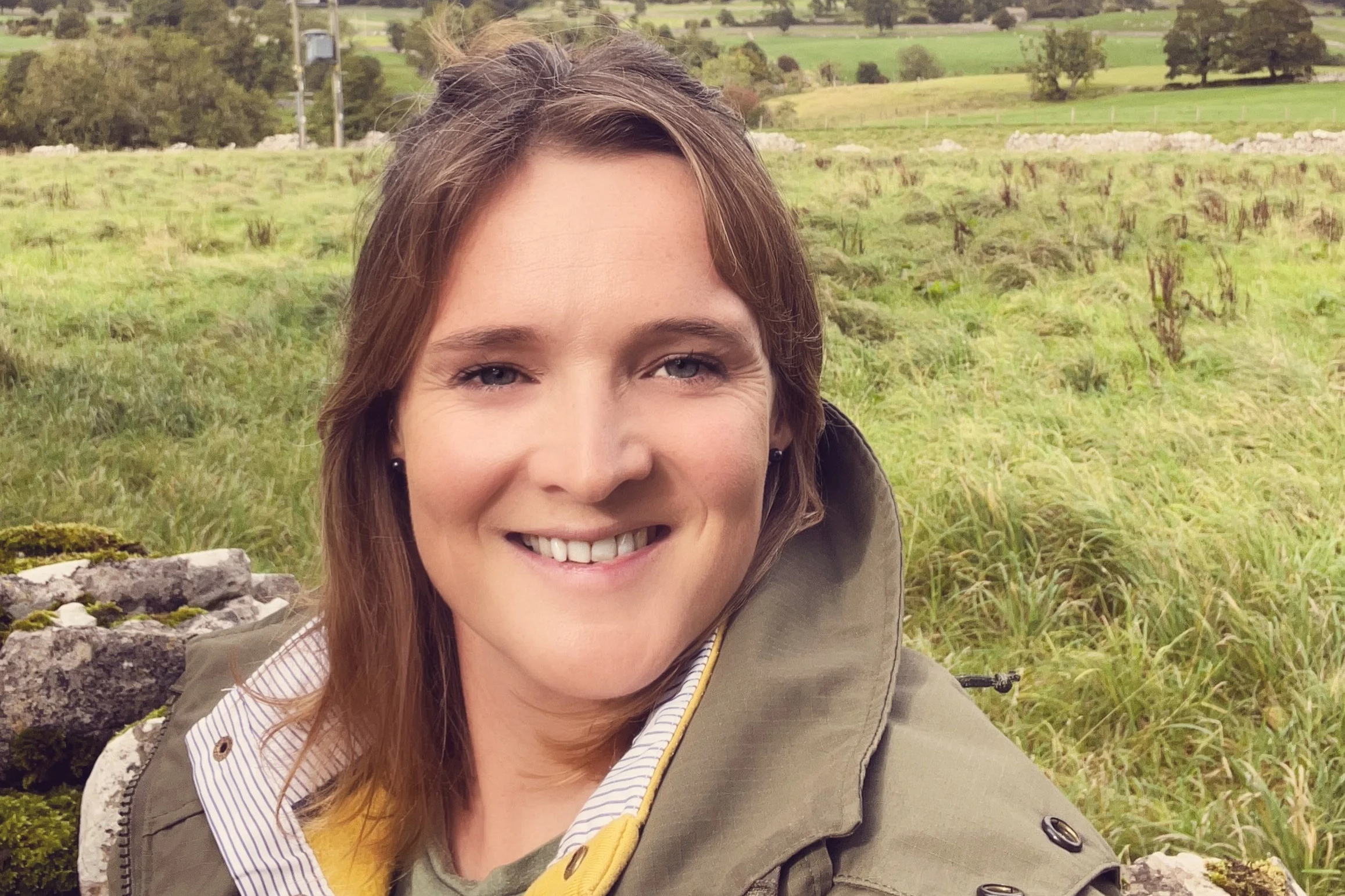
Amy Hughes of Empower Ag
Often she says a fear of loss of either control, competence, identity or certainty, can be an even bigger driver than finances.
Working through these issues begins with having open honest conversations and agreeing common goals, often between different generations.
“It might be a matter of saying, ‘I would like to make these changes and my intention here is to not to push you out, but I'm worried about the future of the farm, if we carry on the way that we are.’
“I appreciate that you want to stay on the farm and be involved, but what does that look like? How is that going to look different and what are you happy with? It's all about conversations and getting them right, which is hard. But communication is key.”
You can listen to the full episode of Grounded ‘Live’ here.
You can also register to attend our next live session, which will take place from 7pm to 8.30pm on Wednesday 21st January, when the topic will be 'Tools for transformation: Everything you need to know about machinery and equipment in regenerative agriculture'.
Regenerate Outcomes works with
farmers to grow profits
We provide one-to-one mentoring to help you cut costs and improve crop and livestock performance.
At the same time, we baseline and measure soil carbon at no upfront cost to generate carbon credits which you can retain or sell for additional income.
Find out more by downloading our Programme Handbook.