
Grounded ‘Live’: Healthier soil, healthier animals?
In the latest recording for Grounded ‘Live’ hosts Stuart Johnson and Kyle Richardville, from our mentoring team, spoke with farm vet Lee-Anne Oliver and Northumberland farmer Shaun Maw about the link between soil health and animal performance.
Lee-Anne, who is based in Hexham, recently founded consultancy Ruminant Revival, which focuses on reducing chemical and pharmaceutical inputs for livestock.
She says conventional agriculture has focused on using pharmaceuticals, vaccines and antibiotics to support higher stocking densities and increased yields.
“We are rapidly facing a big problem, in the veterinary and agriculture industry, that these products are difficult to get hold of, they cost a lot of money, resistance is growing to a lot of them and the consumers do not want them in their food,” says Lee-Anne.
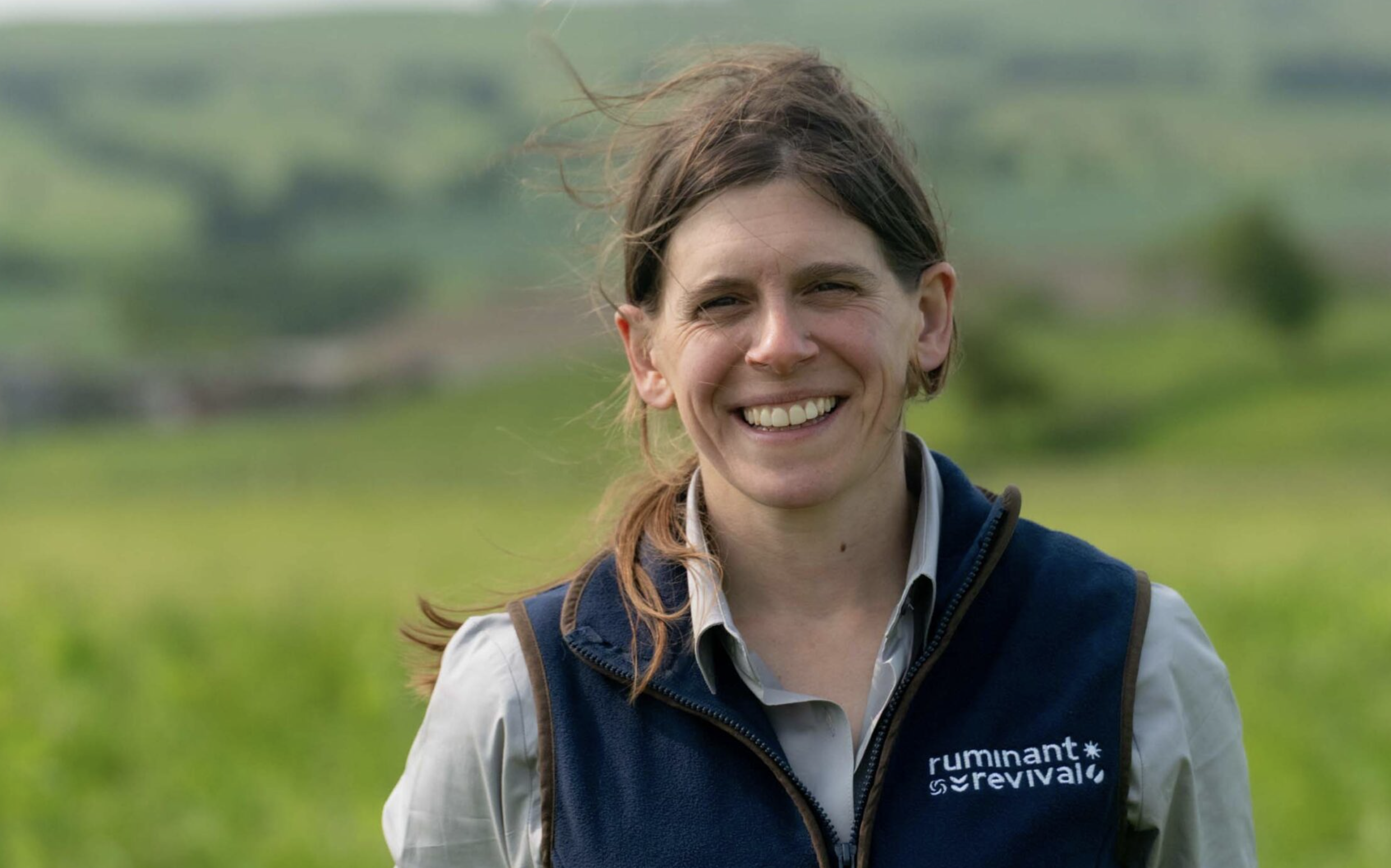
Lee-Anne Oliver
“What's great about the practices related to improving soil health is that they also improve animal health.
“Things like rotating stock, reducing exposure to parasites, moving away from fecal material and selection within the diet, bring immediate and longer term benefits. Once we get nutrient cycling working in our soils, we also get the additional benefits of the trace element provision and secondary compounds.
“We've got to change what we're doing. We've got the answers to the problems that we face. We just have to implement them.”
You can watch the full video here.
How mob grazing can reduce problems with parasites
One of the key practices to improve soil health in livestock farming is mob grazing, also called AMP (adaptive multi-paddock grazing), in which animals are moved from one paddock to another on long rotations, giving plants time to rest and regenerate between grazing events.
Lee-Anne says these frequent rotations help move animals away from parasites before they develop into larvae which can be eaten.
“When an egg lands in the fecal pat of an animal, it takes four days for the larvae to hatch and climb up the grass ready to be eaten,” says Lee-Anne.
“If you're on any less than four day shifts, you're moving away from that parasite challenge all the time.

Longer rotations can help reduce the risk of parasites affecting animal health.
“How long the larvae last on the pasture depends on weather conditions. If it's very hot and dry it might not be very long. If it’s wet and humid they might live longer. So the longer we can leave those rest periods, the better.
“Having higher covers will also help. The larvae can only climb up so far. So if your cover height is more than that, then the livestock are going to miss them.”
Shaun, who farms beef and sheep, near Hexham, has been practising mob grazing since about 2019.
He experienced serious issues with fluke before he began adopting the practice but has since been able to reduce the amount of medication he is giving to his sheep. This has enabled him to cut his expenditure on anti-parasitic treatments from £3150 in 2021 to £1900.
The risk of resistance
As well as saving money, finding natural ways to build resilience is also key to reducing the risk of pests and pathogens developing resistance.
“We’re running out of medicines,” says Lee-Anne.
“Research which was done within the last 10 years suggests that over 80 per cent of farms have developed resistance to some classes of wormers. In New Zealand they are using dual and triple action products, which basically means they are using two or more medicines in the same product and hoping one of them will kill the worms.
“If we abuse these products that is where we are going to end up. We need them in our arsenal so we can use them if we want to, but we don’t want to be relying on them.”
Diversity of plants is key to animal health
Just like humans, animals will benefit from eating a diverse range of plants which will boost the health of their gut microbiome, increasing overall health and resilience to disease and pests.
“Anything that you can do to increase the number of species within your forage is a positive thing,” says Lee-Anne.
“Whatever they eat is reflected in their rumen microbiome, similar to ourselves. We each have a microbiome in our intestines. Ruminants have a microbiome in their rumen.
“Anything that you can do to increase the number of species within your forage is a positive thing.”
“The more diverse the diet, the more diverse and resilient the microbiome. Feed conversion is better and the ruminant is healthier.
“Ruminants take an indigestible product, which is the lignified cellulose contained in grass, and make it into an energy source by releasing volatile fatty acids. If we don't keep that rumen happy then that doesn't work.
Animals know what they need
“Giving animals the free choice to eat what they want to eat is also hugely important,” says Lee-Anne.
“Livestock have a natural ability to be able to browse and choose what they want to eat. A lot of that is around looking for secondary compounds, also called phytonutrients, which bring added health benefits.”

“Giving animals a choice of what to eat actually makes them happier.”
Plants produce phytonutrients as part of processes beyond the job of building and maintaining their main body structure. These include resistance to UV rays or even producing toxins which discourage animals from eating them.
However, they will be much more effective at producing phytonutrients if they are grown in a healthy soil with an active and diverse microbial and fungal population.
“In conventional agriculture, farmers are very focused on protein, carbohydrate and fibre, which are the primary nutrients and all very important,” says Lee-Anne.
“But animals need a lot of secondary nutrients as well, some of them are medicinal, some of them are natural anthelmintics and some of them are antioxidant, which helps with metabolic and physiological stress.
“Research suggests that giving animals a choice of what to eat actually makes them happier as well because they are satisfied in their dietary needs.”
You can catch up on all the advice and discussion from Lee-Anne and the rest of the team by watching the full video here or, alternatively, listen to the recording as a podcast here
Regenerate Outcomes works with
farmers to grow profits
We provide one-to-one mentoring to help you cut costs and improve crop and livestock performance.
At the same time, we baseline and measure soil carbon at no upfront cost to generate carbon credits which you can retain or sell for additional income.
Find out more by downloading our Programme Handbook.